
Biomimicry: Nature-Inspired Solutions for a Sustainable Future
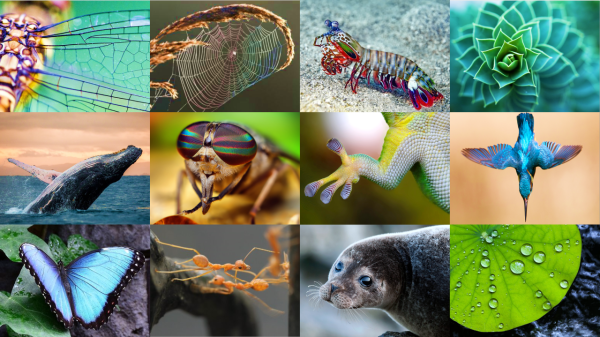
Biomimicry, the practice of imitating nature’s time-tested strategies to solve human challenges, provides a promising avenue for sustainable innovation. For thousands of years, people have been inspired by the natural world. Therefore, Biomimicry goes even further with this idea. Biomimicry is imitating nature to solve human problems. Studying how plants and animals have adapted to their environments over billions of years can give us good ideas for making things more sustainable. It is a great way to develop new ideas that are good for the environment. We use nature’s ideas to make things better in a way that lasts a long time. By studying and simulating complex systems and smart designs found in nature, scientists, engineers, and designers can create solutions that work well, are robust, and are environmentally friendly.
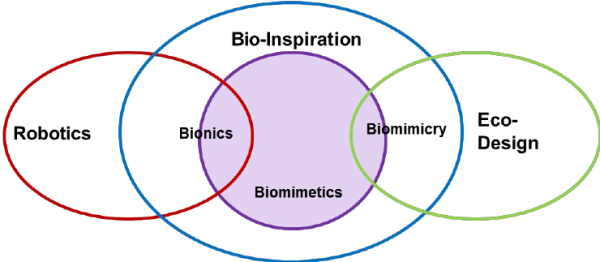
Biomimicry is mimicking nature, making things eco-friendly, and changing and growing like nature. Nature has changed a lot over billions of years, so now organisms and systems work very well and use energy effectively. One important area where biomimicry is good is being efficient with energy. An understanding of this can be gained from plants that convert sunlight into energy through photosynthesis. This information can help make better solar cells or materials that mimic photosynthesis to convert clean energy. By studying how birds fly and how whales use fins to catch wind, wind turbines can be designed to help them work better. This helps them gain more energy. Also, by looking at natural examples, we can find ways to help people. Using energy and resources wisely creates very little waste. Biomimetic solutions seek to mimic these sustainable practices. Just as organisms change to adapt to new environments, biomimicry always promotes learning and change.
Biomimicry has provided ideas for inventions in various fields. One of the first and most famous examples is Velcro, which was invented after seeing burrs stick to animal fur. A man named George de Mestral saw the small hooks of burrs clinging to cloth and animal fur. This gave him the idea of making buckles with hooks and loops. Another example is how the lotus leaf cleans itself, which has inspired scientists to create a surface that repels water. Due to the small shape of the lotus leaf, the water droplets form into round beads and then roll away carrying the dirt with them. This idea has been used to create self-cleaning coatings for things like glass, textiles, and materials used in buildings
However, Water management is another way where nature offers valuable lessons. Biomimicry can help us create systems that copy how wetlands filter water. These systems clean water use less energy and make less harmful waste. Furthermore, learning about how desert plants collect water can help scientists make crops that can survive without much water, or come up with new ways to gather water in dry areas.
Nature-based solutions help us better manage and save water. The bumpy shell of the Namib desert beetle helps collect water from the fog. It has given scientists ideas for making water harvesting systems in dry areas. These systems can help water-scarce communities by providing them with a reliable and long-lasting water source. Using ideas from nature can make cities stronger and better for the environment. As can forests and parks, green roofs, and walls can make cities cooler, cleaner, and more diverse. Designing cities to act like natural ecosystems can make them better places to live and help them adapt to change.
Biomimicry extends beyond mimicking physical structures. We can also learn this from nature’s self-sufficient environment. By learning how these areas work, systems can be created that produce less waste and pollution. The method can be used for buildings, where biomimicry can help create self-regulating temperature control systems or wastewater treatment facilities that act like natural purification processes.
The ventilation system of termite mounds in Africa has inspired people to design sustainable buildings. Although the outside temperature varies, the inside of these mountains remains the same temperature. Engineers have used this idea to create buildings that stay cool and have fresh air without using a lot of energy for air conditioning. Also, the way shark skin is formed has given humans ideas for creating a smooth and bacteria-resistant surface. A shark’s skin has small tooth-like scales called dermal denticles. These denticles help reduce friction and keep the shark’s skin clean. This idea has been used to make swimwear, covers for airplanes, and medical equipment.
Robotics is becoming a large field of study by nature. Robots made to move like animals like flying birds or swimming fish can move better and use less energy. These robots can be used to find and rescue people, inspect the environment, and explore underwater areas. Learning from nature has a lot of potential to help solve big problems like caring for the planet, dealing with climate change, and making sure we have enough resources.
Moreover, farming methods that mimic nature, such as permaculture and agroforestry, help conserve soil, and water and create more types of plants and animals. These methods ensure that there is enough food and help us cope with weather changes. Imitating nature will make renewable energy work better and last longer. For example, wind turbine blades that imitate the rough edges of humpback whale fins can capture more wind and generate more energy. Likewise, solar panels designed like leaves can capture more light and convert it into energy better.
Biomimicry is a great way to develop new environmentally friendly and sustainable ideas. By studying nature’s designs and strategies and using ideas, we can solve modern problems while protecting the environment. Biomimicry has a lot of potential. We can move towards a sustainable and harmonious future by studying and using nature as a guide.
Key References
Jamei, E. and Vrcelj, Z. (2021) ‘Biomimicry and the built environment, learning from nature’s solutions’, Applied Sciences (Switzerland), 11(16). Available at: https://doi.org/10.3390/app11167514.
Kekic, A., Stojanovic Bjelic, L. and Neskovic Markic, D. (2020) ‘Nature-Inspired Design: Biomimicry and Cradle to Cradle’, Quality of Life (Banja Luka) – APEIRON, 18(1–2). Available at: https://doi.org/10.7251/qol2001058k.
Kshirsagar, A.A.P., Malani, A.S.S. and Tiware, E.V.S. (2017) ‘Biomimicry – Nature Inspired Building Structures’, nternational Journal of Engineering Research and Technology, 10(1), pp. 162–166.
Lebdioui, A. (2022) ‘Nature-inspired innovation policy: Biomimicry as a pathway to leverage biodiversity for economic development’, Ecological Economics, 202(January), p. 107585. Available at: https://doi.org/10.1016/j.ecolecon.2022.107585.
Lipholt, N. (2019) ‘Biomimicry-where nature is changing innovation’, (July 2019). Available at: https://purl.utwente.nl/essays/78549.
Mazur, B. (no date) ‘Can IoT and Biomimicry help with sustainable development ? Can IoT and Biomimicry help with sustainable development ?’
Oguntona, O.A. and Aigbavboa, C.O. (2023) ‘Nature inspiration, imitation, and emulation: Biomimicry thinking path to sustainability in the construction industry’, Frontiers in Built Environment, 9(January), pp. 1–12. Available at: https://doi.org/10.3389/fbuil.2023.1085979.
Range, A.G.E. (no date) ‘BIG BIOMIMICRY CHALLENGE A nature-inspired response to some of’.
Sisodia, R., Mitra, A. and Das, S. (2024) ‘Biomimicry and nature-inspired solutions for environmental sustainability’, Hybrid Information Systems, (July), pp. 343–354. Available at: https://doi.org/10.1515/9783111331133-017.
TEZEL ERSANLI, E. and ERSANLI, C.C. (2023) ‘Biomimicry: Journey to the Future with the Power of Nature’, International Scientific and Vocational Studies Journal, 7(2), pp. 149–160. Available at: https://doi.org/10.47897/bilmes.1388402.

Oshani Rideevitage (roshani@std.appsc.sab.ac.lk),
Sabaragamuwa University of Sri Lanka,
Department of Natural Resources,
Undergraduate ( BSc(Hons) in Environmental Sciences and Natural Resource Management).